
Last Updated: August 18, 2026
The Big Island of Hawaii is an island of dramatic contrasts, boasting active volcanoes, sun-drenched beaches, snow-capped peaks, and dense tropical rainforests carved by roaring rivers. Among the island’s most captivating features are its dramatic cascades. Whether you’re looking for a gentle stroll through a botanical paradise or an adventurous trek to a secluded pool, exploring the best waterfalls in Hawaii offers an unforgettable experience.
Because of the unique geography of the island, the majority of spectacular Big Island waterfalls are located on the windward East Side—specifically along the Hilo and Hamakua coasts—where trade winds deliver lush precipitation. In this ultimate guide, we’ll break down the top public and private Hawaii waterfall hikes, critical safety tips, and how you can combine scenic viewing with an adrenaline-fueled zipline adventure!
Quick Comparison: Best Waterfalls on the Big Island Hawaii
To help you plan your itinerary, here’s a breakdown of the top waterfall locations, including trail length, access fees, and whether swimming is allowed.
| Waterfall Name | Trail Length / Difficulty | Access / Permitting | Swimming Allowed? | Highlights |
|---|---|---|---|---|
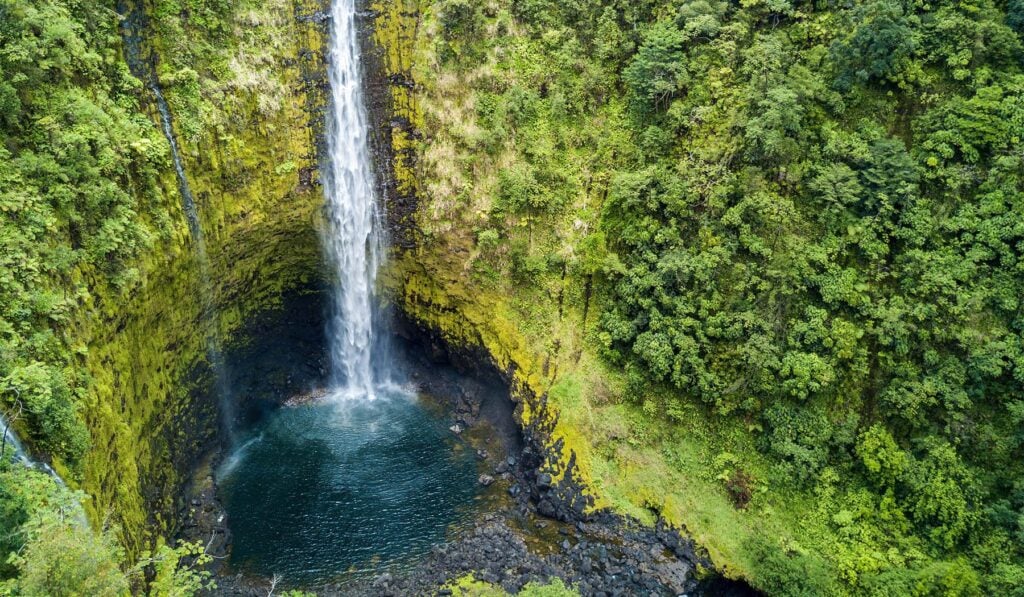
| ʻAkaka Falls | 0.4 miles (Easy / Paved) | State Park Fee ($5/person, $10/car) | No | 442-ft drop through lush rainforest |
| Rainbow Falls | Short walk (Very Easy) | Free Public Park | No | 80-ft fall over a natural lava cave |
| Peʻepeʻe Falls & Boiling Pots | Overlook (Short walk) | Free Public Park | No (Dangerous currents) | Basalt pool formations along Wailuku River |
| Kulaniapia Falls | 0.5 miles (Moderate) | Private Day Pass Required | Yes (Permitted / Weather permitting) | 120-ft fall with kayaking & paddleboarding |
| Kolekole Waterfall (Hawaii Zipline Hike & Swim Tour) | Guided Private Hike (Moderate) | Guided Tour Booking Required | Yes (Exclusive Private Pool Swimming) | Exclusive access to private 250-ft waterfall & swim spot |
| Waiʻale Falls | 0.6 miles (Moderate) | Public Access (Unmaintained) | Exercise extreme caution | Multi-tiered cascade upstream from Hilo |
Top Big Island Waterfall Hikes & Viewpoints
1. ʻAkaka Falls State Park
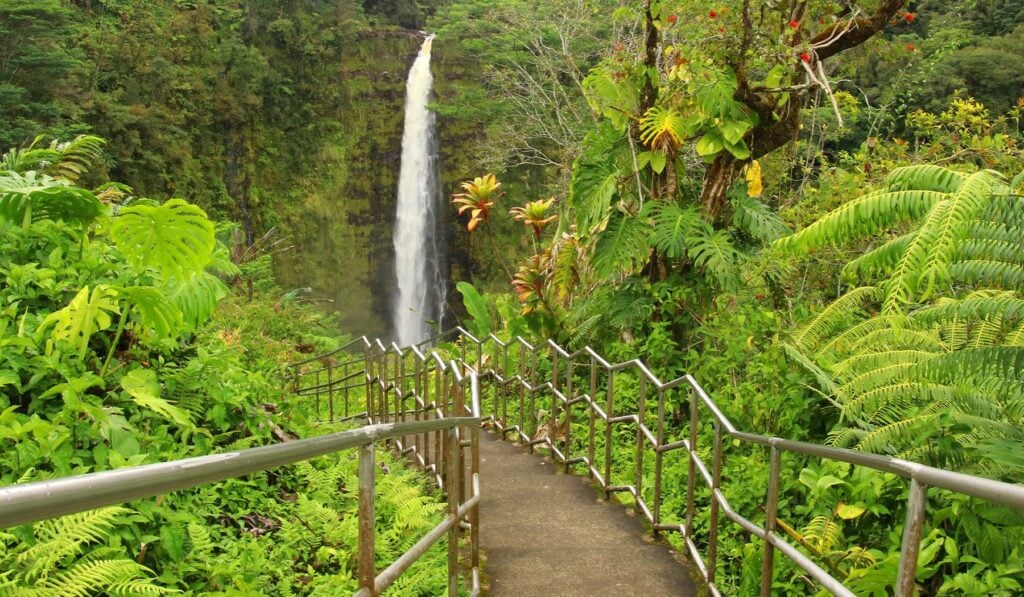
Located along the scenic Hamakua Coast just north of Hilo, ʻAkaka Falls State Park is home to perhaps the most famous waterfall Big Island Hawaii has to offer. The trail is a paved 0.4-mile loop that winds through a dense rainforest overflowing with giant bamboo, wild orchids, and towering tree ferns.
- Distance: 0.4-mile loop trail
- Difficulty: Easy (Paved, includes stairs)
- Access Fee: Non-resident entrance fee applies plus parking
- Bonus View: Along the loop, you will also see Kahuna Falls, a 100-foot cascade veiled by lush jungle foliage.
2. Rainbow Falls (Waiānuenue)
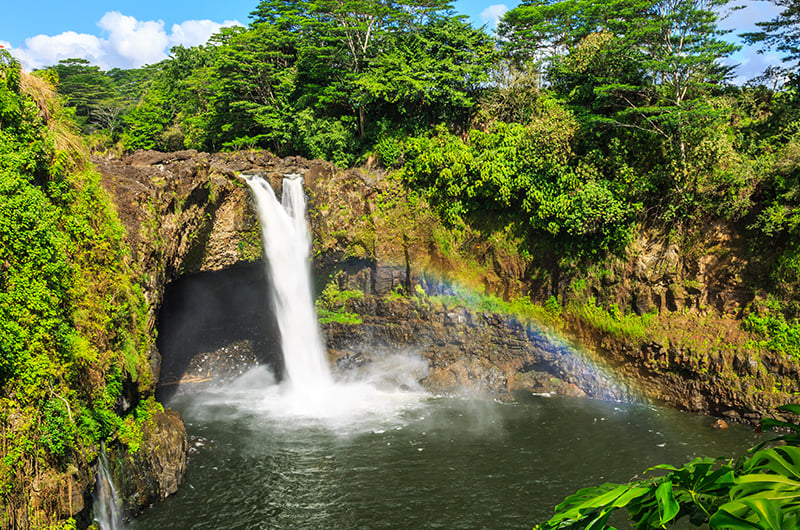
Situated within Hilo city limits, Rainbow Falls is renowned for the brilliant morning rainbows that form in its mist when the sun hits the water droplets at the right angle (typically between 8 – 10 am). The waterfall cascades 80 feet over a natural lava cave that Hawaiian legend identifies as the home of Hina, mother of the demigod Maui.
- Distance: Less than 0.1 miles to primary overlook
- Difficulty: Very Easy
- Access Fee: $5 per person plus $10 per car
- Insider Tip: Walk up the paved stairs to the left of the main overlook to view the massive ancient banyan trees at the top of the trail!
3. Peʻepeʻe Falls & Boiling Pots
Just one mile upstream from Rainbow Falls along the Wailuku River lies Peʻepeʻe Falls and the Boiling Pots section. The “Boiling Pots” are a series of hexagonal basalt pools formed by cooling lava flows. When river levels are high, water rushes through subterranean lava tubes, creating a churning effect that resembles boiling water.
- Distance: Short walk to viewpoint
- Difficulty: Easy overlook view
- Access Fee: Free
- Safety Note: Swimming is strictly prohibited here due to hidden underwater lava tubes and unpredictable, life-threatening undercurrents.
4. Kulaniapia Falls
For travelers seeking a private, tranquil experience with the option to swim, Kulaniapia Falls is on a private 42-acre estate. This 120-foot waterfall drops into a serene pool surrounding manicured grounds.
- Distance: 0.5 miles to pool base
- Difficulty: Moderate
- Access Fee: Day Pass or Overnight Stay required
- Activities: Permitted swimming, paddleboarding, and kayaking when safety conditions permit.
5. Kolekole Waterfalls Private Hike & Swim Tour (Hawaii Zipline & Hiking Tours)
If you want to escape the crowded public park viewing platforms and truly immerse yourself in paradise, the Guided Hike & Swim Tour with Hawaii Zipline & Hiking Tours offers an unparalleled private adventure. Set on exclusive private land along the Hamakua Coast, this guided tour takes you into the rainforest to explore the breathtaking 250-foot Kolekole Waterfall and a second waterfall, both located directly downstream from Akaka Falls.
- Distance: Guided private rainforest trail
- Difficulty: Moderate
- Access Fee: Guided Tour Booking Required
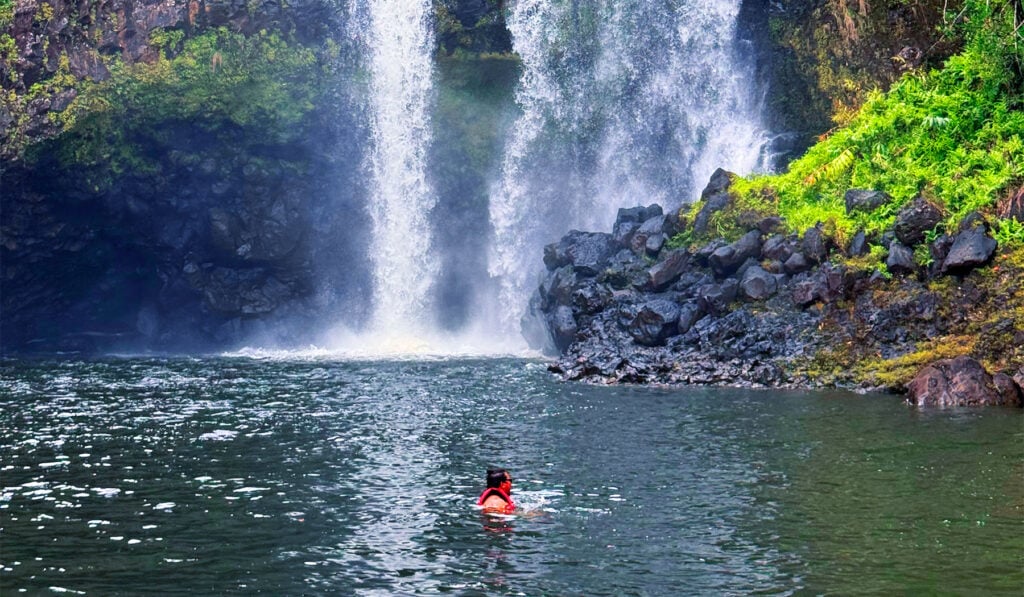
- Highlights & Swimming: Enjoy an intimate, uncrowded trek with expert local guides who share Hawaiian history and botanical insights, followed by an exclusive swim in the freshwater pool beneath private cascades.
6. Waiʻale Falls
Located off the beaten path just above Rainbow Falls, Waiʻale Falls is a beautiful multi-tiered cascade along the Wailuku River. While less crowded than neighboring state parks, the trail to get closer is unmaintained and requires navigating uneven, mud-slicked ground.
- Distance: ~0.6 miles round-trip
- Difficulty: Moderate
- Access Fee: Free
- Tip: The top bridge viewpoint offers excellent photos without needing to scramble down slippery embankments.
Public vs. Private Waterfall Access: What You Need to Know
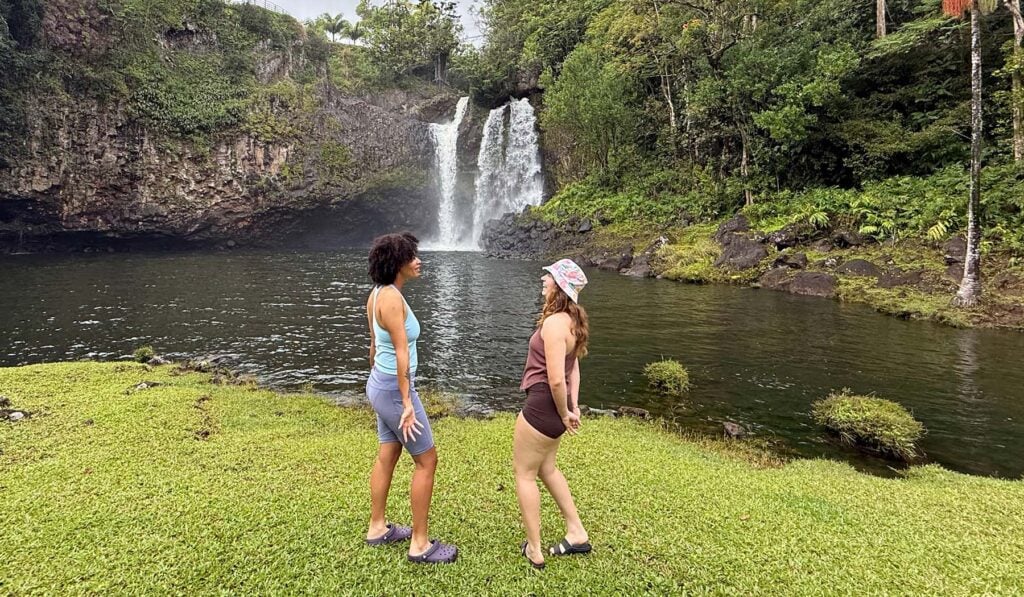
When planning your Big Island waterfall hikes, understanding access regulations is vital. Many visitors arrive expecting to swim beneath every waterfall, only to discover that public state parks prohibit swimming for conservation and safety reasons. Additionally, vast stretches of land along Hawaii rivers are private property or sacred Hawaiian cultural sites (Kapu). Always obey posted signs, stay on designated public trails, and reserve advance permits or day passes when visiting private waterfall estates like Kulaniapia.
Important Safety Tips for Hawaii Waterfall Hikes
Exploring waterfalls in a tropical ecosystem requires preparation and respect for natural forces. Keep these safety rules in mind during your excursion:
- Beware of Flash Floods: Weather near mountain peaks can change instantly. Even if it’s sunny in Hilo, torrential rains upriver can transform calm streams into rushing flash floods within minutes. If water turns muddy or rises rapidly, exit the stream bed immediately.
- Never Jump or Dive: Submerged rocks, shifting lava ledges, and debris make cliff jumping extremely dangerous in Hawaii waterfalls.
- Leptospirosis Awareness: Fresh water streams in Hawaii can contain Leptospira bacteria. Avoid swimming with open cuts or scratches, and never drink untreated freshwater from streams or falls.
- Pack Proper Footwear: Tropical mud makes trails slick. Wear sturdy hiking shoes with good traction or high-grip water shoes.
- Book a Guided Hiking Tour: Your safety is your guide’s top priority so you can focus on having fun! They’ll stay updated on the weather and flash floods and know the areas where you can safely jump into and swim in the water.
Soar Above Cascading Waters with Hawaii Zipline & Hiking Tours!
Want to experience the thrill of towering waterfalls from a bird’s-eye view? Combine your love for hiking with an unforgettable canopy adventure! At Hawaii Zipline & Hiking Tours, our fully guided tours take you deep into private river gorges where you’ll zip directly over roaring waterfalls and lush rainforest valleys impossible to reach from public roads.
Ready for the ultimate Big Island adventure? Book your guided Zip & Dip Tour today!
Frequently Asked Questions About Waterfalls on the Big Island Hawaii
Which Big Island waterfalls can you swim in?
Public state parks like ʻAkaka Falls and Rainbow Falls do not permit swimming due to hazardous conditions and steep cliffs. However, private tours like Hawaii Zipline & Hiking Tours offer waterfall swimming guided hikes. Always check local guidelines before entering the water.
Are there waterfalls on the Kona side of the Big Island?
The Kona coast (the West side of the Big Island) is dry and sheltered from the trade winds, so there are no major waterfalls on the Kona side. Nearly all prominent waterfalls in Hawaii on the Big Island are found along the wetter Hilo and Hamakua coasts on the East side.
What is the tallest waterfall on the Big Island?
The tallest easily accessible public waterfall on the Big Island is ʻAkaka Falls, which drops 442 feet. Hiʻilawe Falls in Waipiʻo Valley is taller at 1,450 feet, but access into the valley is restricted to residents, making ʻAkaka Falls the top choice for travelers.