
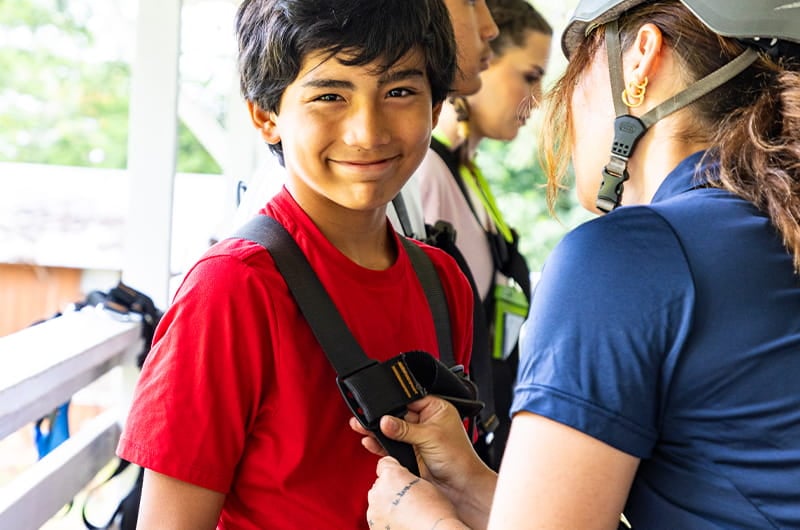
You’re standing on the edge of a wooden platform, high above the tropical canopy. The Pacific breeze is humming through the ferns, and the lush, emerald jungle of the Big Island’s Hamakua Coast stretches out beneath you like a velvet carpet. Your heart is doing a little rhythmic double-tap against your ribs—partly from the sheer excitement of the view, and maybe a little bit from that “what if” thought tucked in the back of your mind. As a parent, you look over at your child, already clipped into the line, and the question hits: Is ziplining actually safe for my kids?
Trust us, you aren’t the only one asking. From the seasoned adrenaline junkie to a parent bringing the keiki (children) along for their very first flight, safety is the foundation of the fun. At Hawaii Zipline & Hiking Tours, we believe you can’t truly let loose and enjoy the rush unless you feel 100% secure. Finding a vacation activity that thrills a tech-obsessed teenager while keeping a 5-year-old safe can feel like an impossible mission, but ziplining is that rare unicorn adventure where the whole family actually wins.
Is Ziplining Safe?
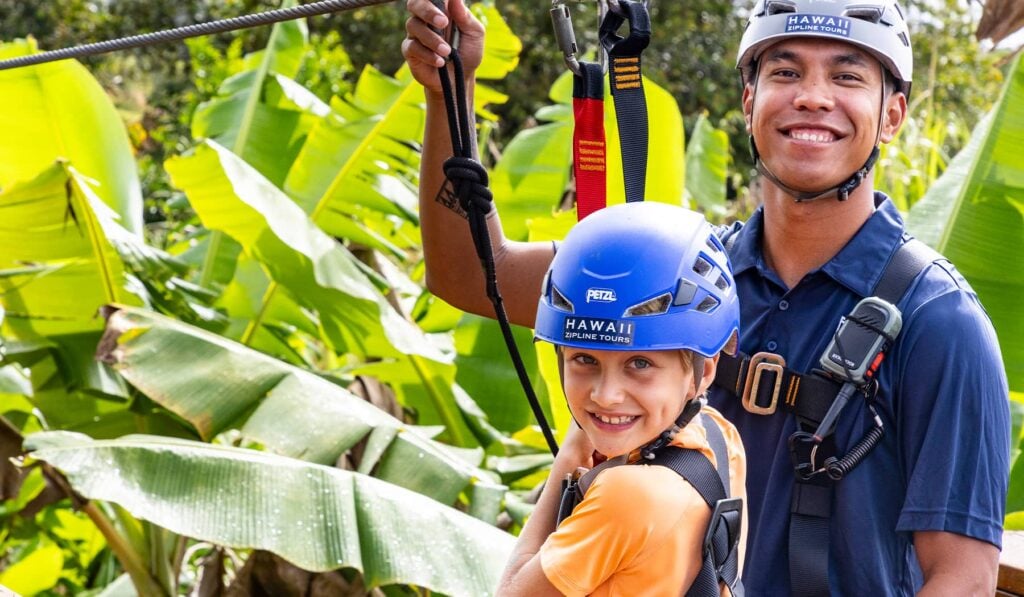
When people think of ziplining, they often imagine backyard setups from decades ago. Modern commercial ziplining in 2026 is a different world entirely. Statistically speaking, you are far more likely to sustain a minor injury tripping over your own flip-flops at the beach or navigating a crowded rental car parking lot in Kona than you are on a professional zipline course.
Commercial ziplining maintains an injury rate lower than common family activities like golf, swimming, or even a neighborhood bike ride. This is because, unlike a bike ride where a stray pebble can cause a fall, every single movement on a zipline is governed by redundant safety systems. At Hawaii Zipline & Hiking Tours, safety isn’t just a goal or a bullet point on a brochure; it’s the heartbeat of our operation. We’ve combined the latest mechanical engineering with rigorous daily inspections to ensure that the only thing you have to worry about is whether you caught the waterfall view on your GoPro.
High-Tech Safety: Gear You Can Trust
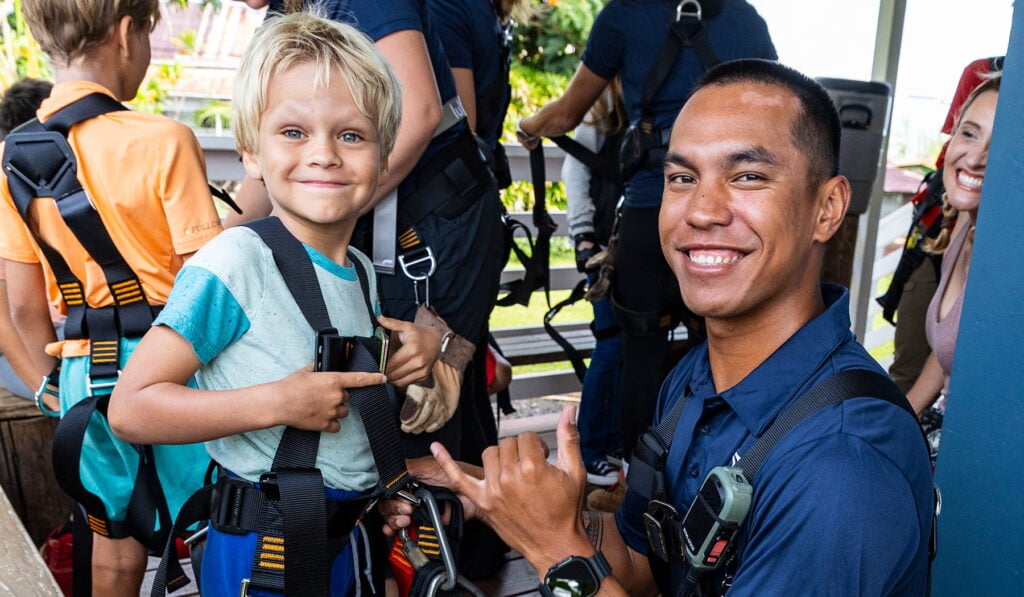
In 2026, ziplining isn’t just a cable and a prayer; it’s a feat of modern engineering. We utilize state-of-the-art equipment designed to remove “human error” from the equation as much as possible.
1. Continuous Belay Systems
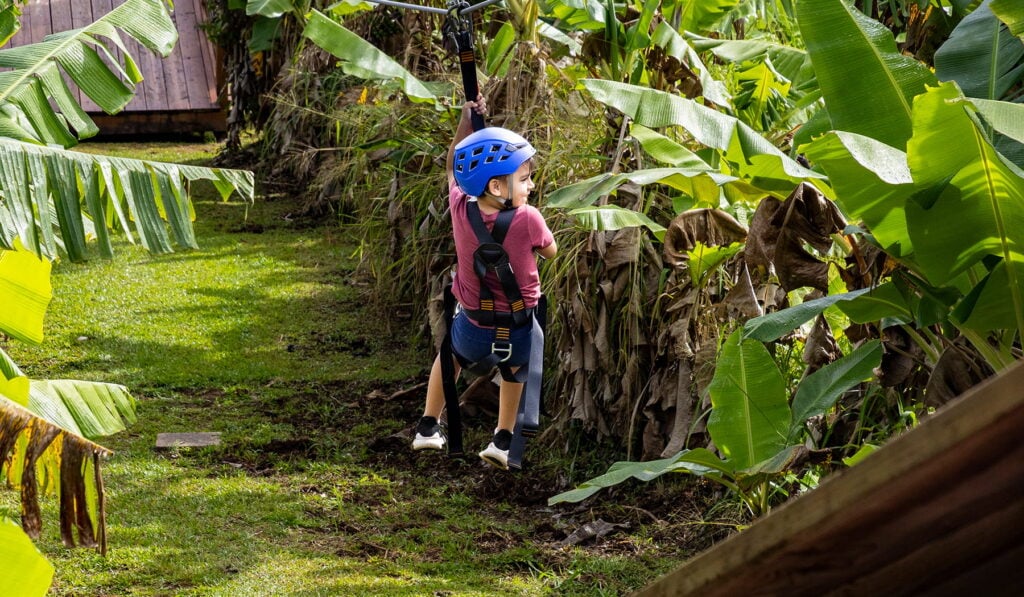
One of the biggest anxieties for parents is the idea of a child unclipping themselves while on a high platform. We’ve eliminated that worry. Our course utilizes a continuous belay system. This means that from the moment your child is attached to the safety line at the start of the course, they are physically unable to disconnect until they are back on solid ground at the end. It’s a “lock-and-key” style technology that provides parents with ultimate peace of mind.
2. Passive vs. Active Braking
In the early days of ziplining, riders had to “hand-brake” by pulling down on the cable with heavy leather gloves. This was difficult for children to master and often led to abrupt stops. We use passive braking systems. Our ziplines are engineered with magnetic or gravity-based braking that slows you down automatically as you approach the platform. You don’t have to do a thing except enjoy the ride.
3. The Triple-Check Protocol
Every piece of gear, from the harnesses and helmets to the stainless steel pulleys, is rated for several tons, far exceeding the weight of any human rider. Furthermore, our course undergoes a three-tier inspection:
- Daily: Guides inspect every inch of the cable and every carabiner before the first guest arrives.
- Monthly: Senior management performs a deep-dive audit of all mechanical components.
- Annually: Independent third-party engineers conduct a structural sweep of the entire course to ensure compliance with ACCT (Association for Challenge Course Technology) standards.
Our Guides: Your Safety Sherpas
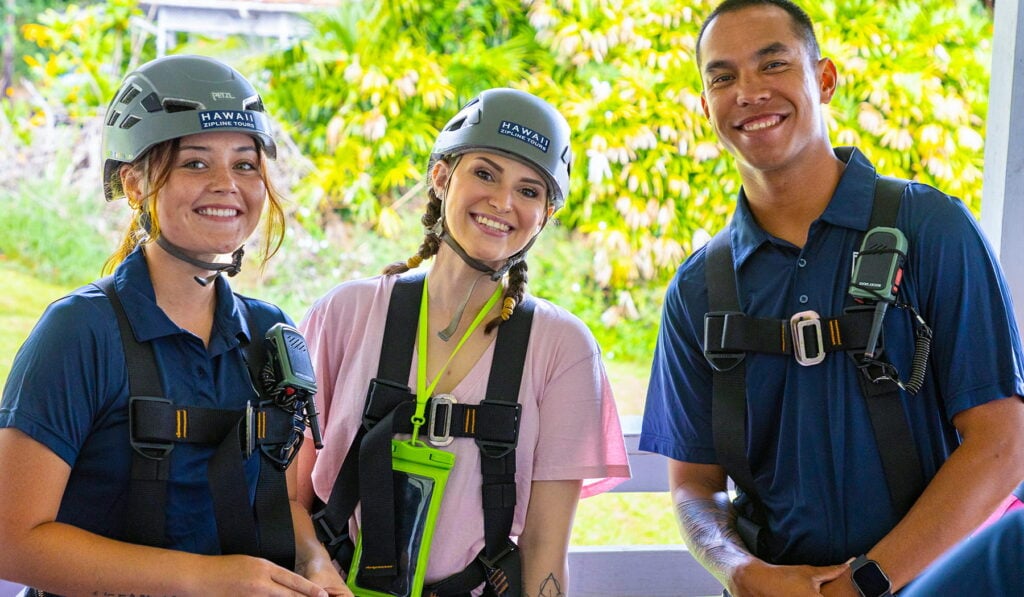
While the gear is impressive, it’s the people that make the experience. Our guides are famous across the islands for their aloha spirit, their dad jokes, and their ability to spot a whale from a mile away. But behind the laid-back island vibes, they are highly trained safety professionals.
Every guide at Hawaii Zipline & Hiking Tours undergoes over 40 hours of rigorous safety certification, including high-angle rescue training and first-aid. They are also experts in psychological safety.
We know that roughly 50% of our guests have at least a mild fear of heights. Our guides are trained to recognize the signs of anxiety in children and adults alike. They won’t just push you off; they walk you through the physics, demonstrate the strength of the gear, and build your confidence step-by-step. By the time you reach the third line, those nerves usually transform into pure adrenaline-fueled joy.
Why This is the #1 Thing to Do in Hawaii with Kids
Hawaii offers a million ways to spend your day—snorkeling, luaus, volcano tours—but ziplining consistently ranks as the highlight of the trip for families. Here’s why our specific tour on the Big Island stands out:
Progressive Difficulty
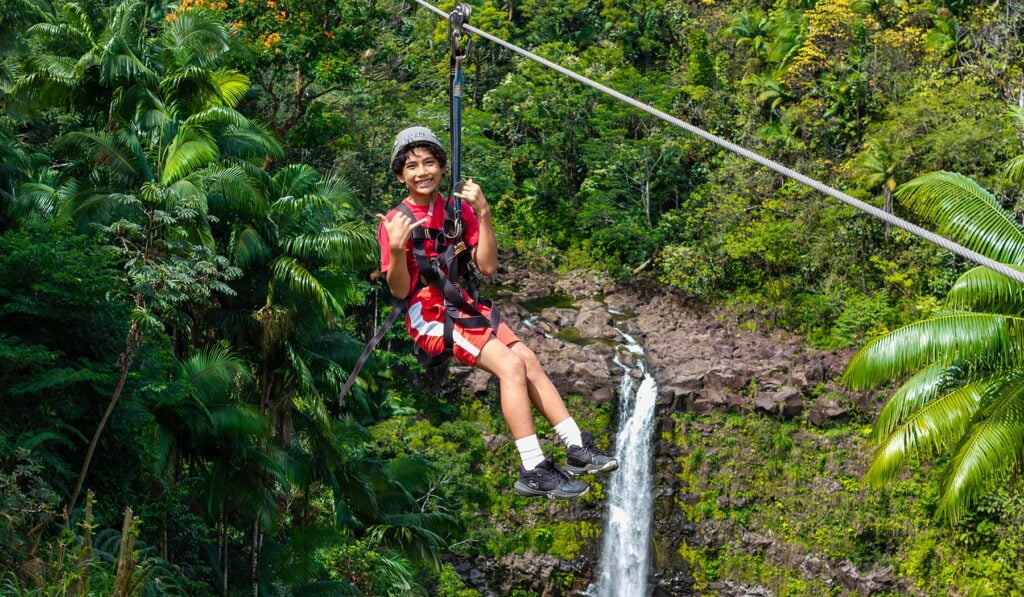
We don’t start you on the biggest line. Our course is designed to “warm up” your comfort levels. We start with shorter, lower lines over beautiful botanical gardens. By the time you reach the grand finale, soaring above a 450-foot ravine and over the 250-foot Kolekole Waterfall, you and your kids will feel like seasoned pros.
Incredible Inclusivity
We pride ourselves on being one of the most family-friendly tours in Hawaii. We welcome children as young as 5 years old (provided they meet the 40 lb minimum weight requirement). We’ve seen five-year-olds show more bravery than their parents!
More Zip, Less Hike
Some zipline tours in Hawaii require grueling uphill hikes between lines, which can lead to “meltdowns” for younger kids. Our course is designed for accessibility. The walks between platforms are short, shaded, and feature 14 different waterfalls along the way. It’s a nature walk and an adventure tour rolled into one.
Preparing Your Keiki (Kids) for Flight
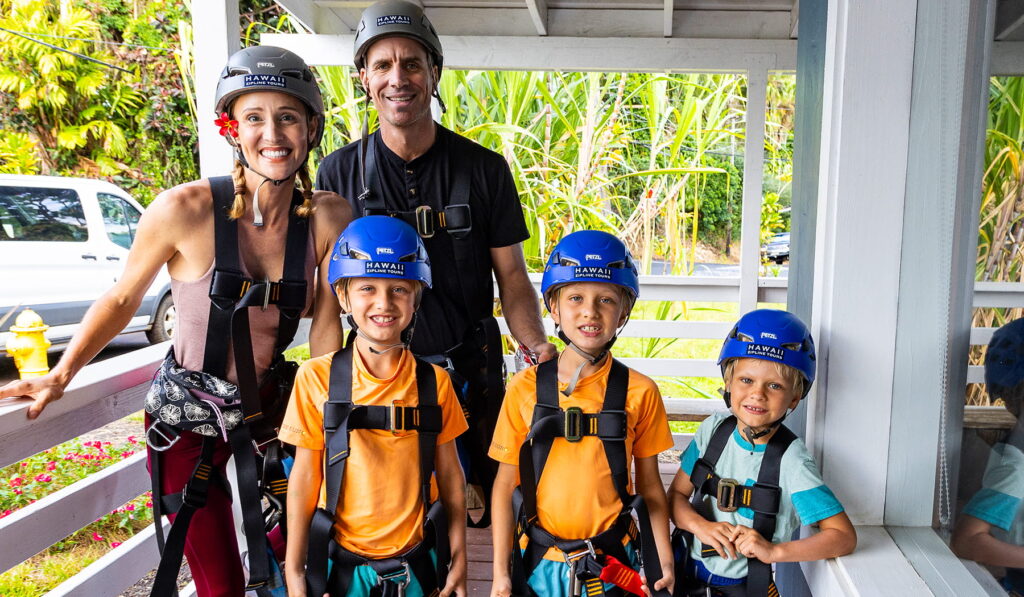
To ensure the best possible experience, there are a few ground rules to keep the physics working in your favor:
- Weight Requirements: For the braking systems to function correctly, riders must be between 40 lbs and 275 lbs. (Full requirements are on our FAQ Page.)
- Tandem Zipping: If a child is on the lighter side (40-69 lbs), they may zip tandem with one of our professional guides. This adds weight to the line to ensure they have enough momentum to reach the next platform without stopping short.
- Footwear is Key: This is the most important rule! You must wear secure, closed-toe shoes. Think sneakers or hiking boots. Flip-flops (slippers), crocs, and Tevas are a safety hazard on the platforms and are not allowed.
- The “Liquid Sunshine” Factor: This is the tropical side of the island. We zip in the rain! In fact, zipping through a warm tropical mist makes the jungle feel even more magical. We only pause tours for high winds or lightning.
Conclusion: Making Core Memories Safely
In the end, vacation is about making “core memories.” Ten years from now, your kids might not remember the breakfast buffet at the hotel, but they will absolutely remember the moment they soared like a Hawaiian Hawk over a thundering waterfall.
Safety isn’t an accident; it’s a procedure. When you book with Hawaii Zipline & Hiking Tours, you’re booking a team that lives and breathes these protocols so that you can focus on the laughter, the views, and the “did you see that?!” moments.
Ready to fly? Book your Big Island Zipline Adventure today and let’s get your family in the air!
P.S. If you have family members who prefer to stay grounded, check out our Waterfall Hike & Swim Adventure. They can explore the same beautiful jungle but with their feet firmly on the ground.